
Greater Tacoma HVAC Contractor
Dryer Vent Installation, Replacement & Repair in Puyallup

Stop Wasting Hours and Money on a Slow Dryer
Does your dryer take 2-3 cycles to dry one load? That's not normal - and it's costing you money and creating a serious fire hazard.
The problem is usually your dryer vent: clogged with lint, kinked from poor installation, too long with too many turns, or even disconnected and venting into your wall.
Professional dryer vent service fixes these problems, cuts drying time by 50-70%, lowers your electric bill, and eliminates fire hazards.
Signs Your Dryer Vent Has Problems
Takes Multiple Cycles to Dry Clothes
If you're running your dryer 2-3 times to dry a single load, your vent is restricting airflow.
You're wasting 2-4 hours and $1-2 in electricity per load.
Visible Damage or Poor Installation
Kinked flex vent, crushed sections, too many turns, venting into attic or wall cavity - all common problems we see in Pierce County homes.
Laundry Room Gets Hot and Humid
Your dryer vent should exhaust heat and moisture outside.
If your laundry room feels like a sauna, the vent isn't working properly.
Clothes Come Out Hot But Still Damp
Heat without airflow means your dryer is working but the moisture has nowhere to go.
Classic sign of vent restriction or blockage.
Burning Smell When Dryer Runs
Overheating caused by restricted airflow.
This is a serious fire hazard that needs immediate attention.
Excessive Lint Around Dryer or Laundry Room
Lint escaping into your home means your vent is disconnected, damaged, or severely restricted.
This is a fire hazard.
The Hidden Cost of a Bad Dryer Vent
Electric Bill Impact
A dryer with restricted venting uses 2-3x more electricity per load. If you do 8 loads per week, a bad vent costs you $15-30 extra per month ($180-360 per year) in wasted electricity.
Time Wasted
At 2-3 cycles per load, you're spending an extra 2-4 hours per week waiting for clothes to dry. That's 100-200 hours per year of your life wasted.
Dryer Lifespan
Overworking your dryer shortens its lifespan by years. A $700 dryer that should last 15 years might only last 8-10 years when working against restricted venting.
Fire Risk
15,000 house fires per year are caused by dryers - mostly due to lint buildup in poorly designed or maintained vents. This is the most serious consequence.
Professional dryer vent service costs $400-800. It pays for itself in 1-3 years just in electricity savings, while eliminating fire risk and saving you hours of time.

What Professional Dryer Vent Service Includes
Complete Vent Inspection
We inspect your complete dryer vent system from the dryer to the exterior termination
✓ Current vent configuration and routing
✓ Material type and condition
✓ Lint buildup and restrictions
✓ Proper exterior termination
✓ Code compliance issues


New Installation
When installing a new dryer vent or relocating your dryer, we
✓ Design the shortest, most direct route possible
✓ Use proper 4" rigid or semi-rigid metal venting
✓ Minimize turns (each turn reduces airflow)
✓ Install proper exterior termination with pest guard
✓ Ensure code compliance
Replacement
When existing vents are damaged, improperly installed, or past their lifespan
✓ Remove old, damaged, or improper venting
✓ Install new 4" code-compliant venting
✓ Route for optimal airflow
✓ Properly seal and secure all connections
✓ Upgrade to exterior code-compliant termination


Repair
When vents can be repaired rather than replaced
✓ Reconnect disconnected sections
✓ Replace damaged sections
✓ Straighten kinked areas
✓ Re-secure loose venting
✓ Clear restrictions and blockages
Proper Dryer Vent Standards
Material
4" rigid metal or semi-rigid metal duct. Never foil flex, vinyl, or plastic (fire hazards).
Length
Shorter is always better. Maximum recommended length is 25 feet minus 5 feet for each 90-degree turn.
Turns
Minimize turns. Each 90-degree turn reduces airflow by 20-30%. We aim for maximum 2 turns.
Routing
Shortest, most direct path to exterior. Never vent into attics, crawl spaces, walls, or garages.
Termination
Proper exterior hood with pest guard and backdraft damper. Must vent to exterior wall, not under house or into eaves.
Connections
All joints secured with metal screws (not duct tape). No sharp bends or crushed sections.
What to expect
Our Dryer Vent Service Process

Inspection
We inspect your complete dryer vent setup, identify problems, and take photos to show you what's wrong.

Recommendations
We explain what needs to be done - install, replace, or repair - and why. You'll see the problems and understand the solutions.

Work Completion
We complete the work using proper materials and techniques. Most jobs take 2-3 hours.

Testing
We test airflow to verify the vent is working properly. You'll notice the difference immediately in dryer performance.
Dryer Vent Service Pricing
Investment Range
$400-$800 for most homes
What Affects Price
- Type of service (install, replace, or repair)
- Vent length and routing complexity
- Number of stories
- Exterior wall material
- Accessibility

Typical Costs
Simple Repair
$400-$500
Reconnecting disconnected sections, replacing short damaged sections
Standard Installation/Replacement
$500-$650
New vent or complete replacement with straightforward routing
Complex Installation
$650-$800
Long runs, multiple stories, difficult exterior access, or complex routing
Your inspection includes exact pricing for your specific situation.
Return on Investment Savings of $15-30/month on electricity = $180-360/year. On a $600 investment, payback in 2-3 years, plus elimination of fire risk and time savings.
New Installation vs. Replacement vs. Repair
When to Install New
- New dryer location
- No existing vent
- Adding laundry facilities
- Complete remodel

When to Replace
- Vinyl or plastic vent (fire hazard)
- Excessive length or turns
- Venting to wrong location (attic, crawl space)
- Severely kinked or crushed
- Old and deteriorated
When to Repair
- Disconnected but otherwise good vent
- Minor damage in small section
- Good routing but loose connections
- Recent installation with small issues

We'll honestly assess your situation and recommend the most cost-effective solution.
Common Dryer Vent Problems in Pierce County Homes
Venting into Wall Cavity
Surprisingly common. Builders or homeowners vent dryer into the wall instead of to the exterior. Creates moisture problems, mold, and doesn't help dryer performance.
Crushed Flex Vent Behind Dryer
Dryer pushed too close to wall crushes flexible venting, restricting airflow by 60-80%. Simple to fix but causes significant problems.
Too Many Turns
Venting that goes up, over, around, and through multiple turns loses so much airflow that dryers can't work properly.
Vinyl or Foil Flex Vent
Fire hazard that doesn't meet code. Common in older installations. Should be replaced with rigid metal.
Venting to Attic or Crawl Space
Creates serious moisture problems and doesn't help dryer performance. Must be extended to exterior.
No Exterior Termination Hood
Vent just exits through a hole in the wall. Allows pests, cold air, and moisture back into the system.
Dryer Vent Maintenance
What You Should Do
- Clean lint screen after every load
- Vacuum around and behind dryer every 3-6 months
- Check exterior vent hood periodically - clear any lint buildup
What We Do
During installation, replacement, or repair, we ensure your vent is properly designed and installed to minimize future maintenance needs.
Professional Cleaning
If you have an existing vent with heavy lint buildup, professional cleaning may be needed before or during repair/replacement.

FAQ
How often should dryer vents be replaced?
Properly installed metal vents last 20-30+ years.
However, many vents need replacement much sooner due to poor initial installation, wrong materials, or damage.
Can I use flexible venting?
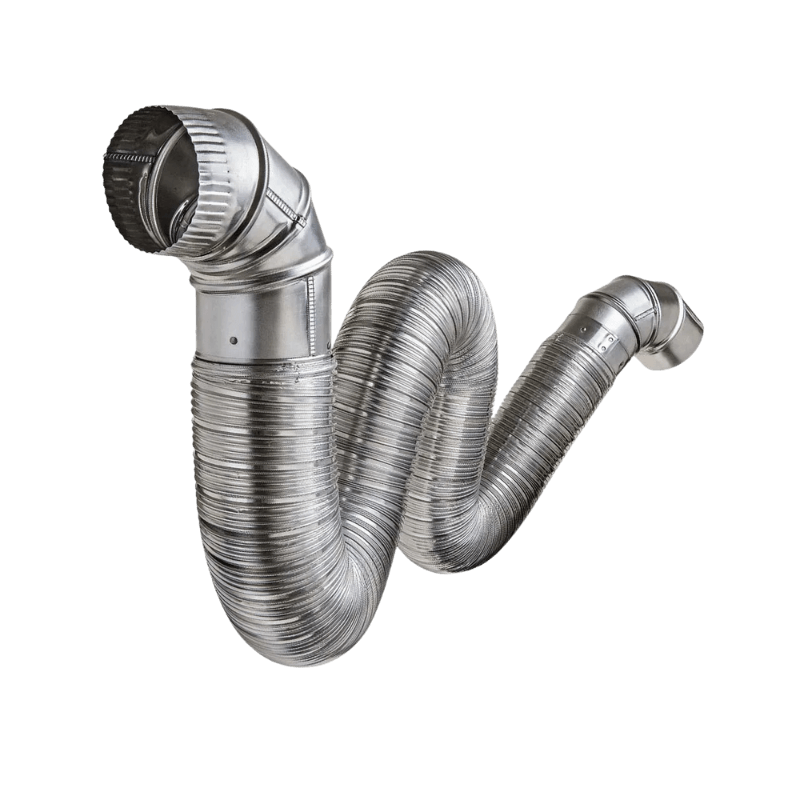
Only semi-rigid metal flex is acceptable, and only for the final 2-3 feet between wall and dryer to allow for dryer movement.
The rest should be rigid metal duct.
Why does my dryer work fine but still takes forever?
Your dryer is working - heating air properly.
But restricted venting prevents moisture from escaping, so clothes stay damp.
The problem is the vent, not the dryer.
Is a long dryer vent okay if it's straight?
Length matters, but turns matter more.
A long straight run performs better than a short run with multiple turns.
However, shorter is always better when possible.
My dryer vent goes through the roof. Is that okay?
Not ideal. Roof venting creates maintenance issues (lint on roof, potential leaks) and adds unnecessary length.
Side wall venting is better when possible.
Can you relocate my dryer vent?
Yes. If relocating your dryer or want better vent routing, we can design and install a new vent route.
What about dryer vent cleaning?
If your existing vent is properly installed but has lint buildup, cleaning may solve the problem.
If the vent is poorly installed, replacement is usually more effective than cleaning.
Will this void my dryer warranty?
No. Proper venting is required by dryer manufacturers and improves performance. Improper venting can actually void warranties.
Why Choose Post Results for Dryer Vent Service
Specialized Expertise
10 years specializing in residential venting means we've seen and solved every dryer vent problem that exists in Pierce County homes.
Code-Compliant Work
All installations meet current building codes and manufacturer requirements. Passed inspection, no issues.
Owner-Operator Service
Ryan personally handles your dryer vent work. Same experienced professional from inspection through completion.
Proper Materials
We use only appropriate materials - 4" rigid metal duct, proper exterior terminations, quality connections. No shortcuts.
Immediate Results
You'll notice the difference immediately - faster drying, lower bills, peace of mind about fire safety.
Get Started
Ready to Fix Your Dryer?
Stop wasting hours and money on a dryer that doesn't work properly. Professional dryer vent service fixes the problem permanently while eliminating fire hazards.
Get Your Free Dryer Vent Inspection Today
See exactly what's wrong with your dryer vent and what it costs to fix - no obligation.
